
Unlocking Modern Interior Aesthetics: The Art of Contemporary Spatial Design
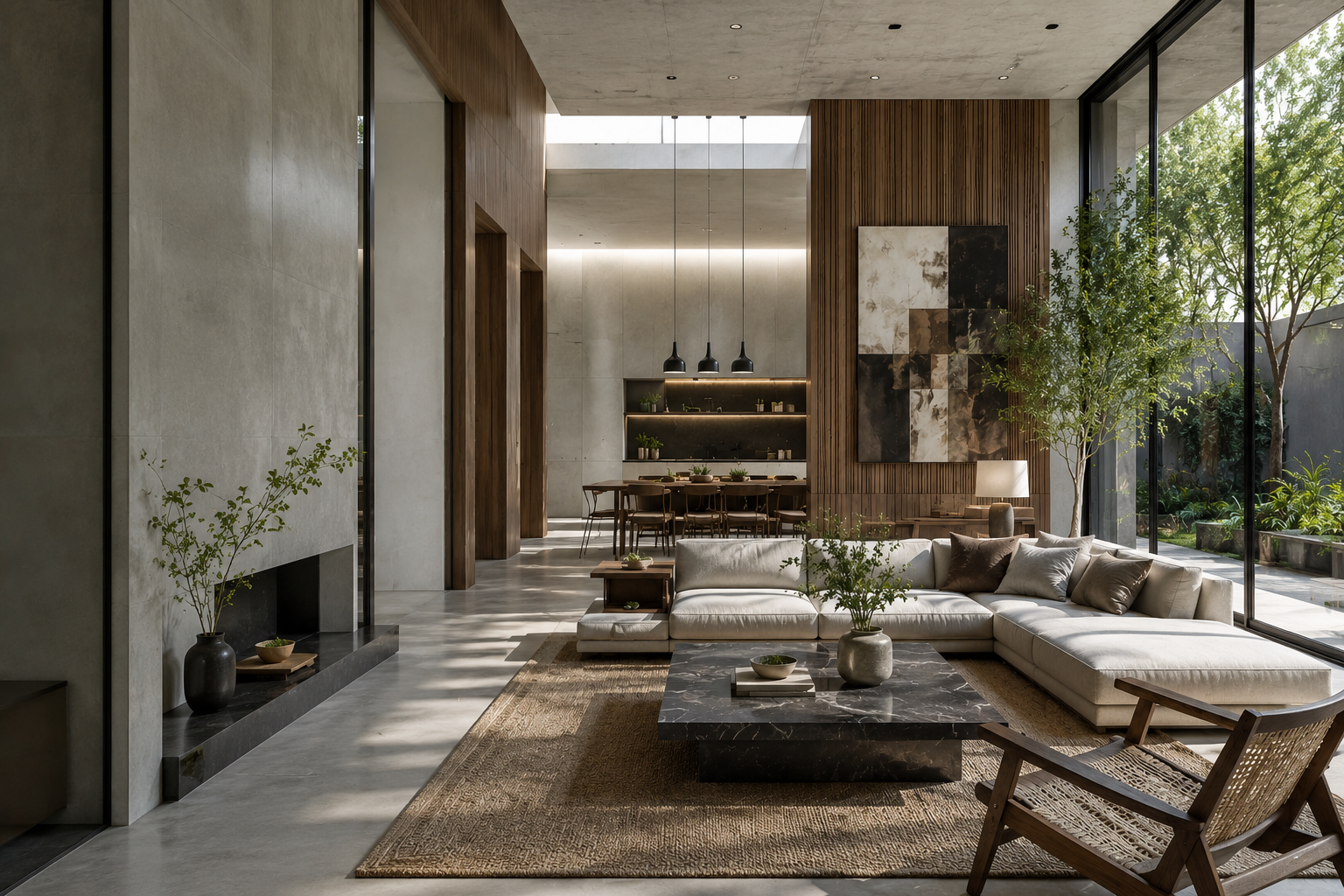
Table of Contents
- The Essence of Modern Interiors
- Understanding Modern Interior architecture
- Core Principles of Modern Spatial Design
- The Role of Colours
- Exploring Contemporary Interior Design Styles
- Creating Refined Spaces with Professional Expertise
The Essence of Modern Interiors
Modern interior design is about more than clean lines and minimalist aesthetics. It is the thoughtful balance of functionality, materiality, proportion, light, and comfort to create spaces that feel both refined and personal.
Contemporary interiors increasingly move beyond the traditional idea of luxury. Instead of relying solely on opulent finishes, modern spatial design focuses on creating environments that are comfortable, timeless, and responsive to the way people live.
From carefully considered layouts to natural materials and layered lighting, every element contributes to the character of a space. When these elements work together seamlessly, residential and commercial interiors can feel sophisticated without compromising warmth or functionality.
Understanding Modern Interior Architecture
Modern interiors are closely connected to the architecture of the space itself. Rather than treating interior design as an independent layer of decoration, contemporary practice considers the relationship between structure, spatial planning, materials, furniture, lighting, and human movement.
A successful interior begins with understanding the user. The way a family gathers, works, rests, entertains, or moves through a home should influence the arrangement of spaces. Similarly, a commercial environment must respond to circulation, productivity, branding, customer experience, and operational requirements.
This approach creates interiors that are not only visually appealing but also purposeful. Every opening, partition, piece of furniture, material transition, and lighting element can contribute to the overall spatial experience.
Core Principles of Modern Spatial Design
Creating a well-designed interior requires more than selecting beautiful finishes. Successful interior architecture begins with understanding how people experience and interact with a space.
- Spatial Harmony: Proportion, circulation, and visual connectivity help interiors feel cohesive while maintaining a clear sense of purpose.
- Material Authenticity: Natural and tactile materials such as stone, timber, metal, and textured surfaces add depth and character to contemporary interiors.
- Lighting Optimization: Maximizing natural daylight while incorporating layered ambient, task, and accent lighting can enhance architectural features and create different moods throughout the day.
- Functional Planning: Furniture placement, storage, circulation, and zoning should respond to everyday activities rather than simply filling available space.
- Visual Continuity: Repetition of materials, colours, textures, and architectural details can establish a consistent visual language throughout an interior.
- Human Comfort: Acoustics, thermal comfort, ergonomics, natural ventilation, and appropriate furniture dimensions are essential to creating spaces that people genuinely enjoy occupying.
The Role of Colour in Contemporary Interiors
Colour has a significant influence on how a space is perceived. While contemporary interiors are often associated with neutral palettes, modern design does not necessarily require an absence of colour.
Warm neutrals, earthy tones, muted greens, deep browns, terracotta, charcoal, and natural timber tones can create a more grounded atmosphere. Accent colours can then be introduced through furniture, artwork, textiles, or architectural details.
Rather than following short-lived colour trends, a thoughtful colour palette should respond to the architecture, natural light, material palette, intended atmosphere, and personality of the user.
Exploring Contemporary Interior Design Styles
Contemporary interiors can take many forms, from understated minimalism to nature-inspired spaces. Understanding the defining characteristics of different styles can help create a more intentional design direction.
| Design Style | Primary Focus | Material Palette | Spatial Feel |
|---|---|---|---|
| Minimalist | Simplicity & Function | Concrete, Glass, Steel | Open & Airy |
| Industrial | Raw Elements | Exposed Brick, Metal | Loft-like & Edgy |
| Biophilic | Nature Integration | Wood, Plants, Water | Organic & Calming |
Rather than following a single trend, contemporary interior design often combines elements from different styles to create spaces that reflect the personality, lifestyle, and aspirations of the user.
Creating Refined Spaces with Professional Expertise
Exceptional interior architecture comes from translating a design vision into a space that feels effortless, functional, and distinctly personal.
Saikat Ghosh Design Associates brings together architectural thinking, material sensitivity, and contemporary design principles to create distinctive residential and commercial environments. With a portfolio spanning diverse projects, the practice focuses on developing spaces where luxury, functionality, and architectural character work together seamlessly.
Whether it is a sophisticated residence or a thoughtfully designed commercial environment, the right design approach can transform everyday spaces into meaningful experiences.
Explore contemporary interior architecture and discover how Saikat Ghosh Design Associates can shape your next space.